Record and replay groups of keyboard and mouse actions With the built-in action wizard editor.
|
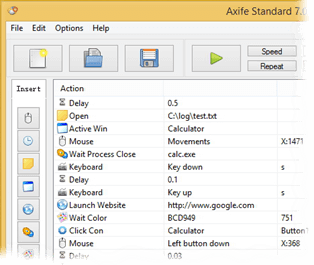 |
Record and replay groups of keyboard and mouse actions With the built-in action wizard editor.
|
|
high-utility cameras, often starting around $30–$100 while still offering AI detection and local storage. Yale Smart Indoor Camera : Best for simplicity and built-in storage (2–4 days) without any subscription. Security.org Key Comparison: Network (IP) vs. Analog Network (IP) Camera Analog CCTV Camera Resolution Up to 4K and higher (UHD) Typically limited to SD or 1080p Single Ethernet (PoE) for power & data Separate cables for power and video Intelligence Advanced AI (Human/Face/LPR detection) Basic motion detection (prone to false alerts) Flexibility Operates independently of a PC Requires a DVR for processing and storage To help you narrow this down, are you looking for an setup, and do you prefer local storage cloud-based recording? AI responses may include mistakes. Learn more Security Camera Reviews - CCTV Camera World
The allintitle: operator is a powerful Google command that filters results to show only pages where appears in the HTML title tag. allintitle network camera networkcamera better
Network cameras, also known as IP cameras, are digital cameras that connect to a network via Ethernet or Wi-Fi. They are widely used for surveillance and security purposes, allowing users to monitor areas remotely through a network or the internet. Analog Network (IP) Camera Analog CCTV Camera Resolution
| Feature | Why It Matters | |---------|----------------| | | 4MP, 4K (8MP) vs 2MP – clarity for identification | | WDR (Wide Dynamic Range) | Better performance in mixed lighting (shadows + bright spots) | | Low-light / Starlight sensor | Maintains color image near darkness | | H.265 compression | Saves bandwidth/storage vs H.264 | | Cybersecurity | TLS, HTTPS, digest auth, no default backdoors | | ONVIF compliance | Ensures interoperability with third-party NVRs/VMS | | Audio & AI | Two-way audio, person/vehicle detection, line crossing | | Cloud or local storage | SD card, NAS, or cloud redundancy | | PoE (Power over Ethernet) | Single cable for power + data | Network cameras, also known as IP cameras, are
Software was the quiet, grueling work. Mara favored open standards and tiny, well-tested modules. They wrote the firmware to boot quickly, accept only signed updates, and default to encrypted local storage. The analytics were conservative: person-detection, motion vectors, and scene-change metrics. No face recognition. No behavioral profiling. When people suggested “just add identifiers” for richer features, Mara shut that path down. “We can give value without making dossiers,” she said. Kai learned to trust that line.