✨ Welcome to our new update!
Ethereum Mvrv Z-score !!top!! Jun 2026
Secure, scalable, and game-changing authentication for your applications. Get started in minutes with our powerful APIs and SDKs.

Secure, scalable, and game-changing authentication for your applications. Get started in minutes with our powerful APIs and SDKs.
Integrate into any programming language

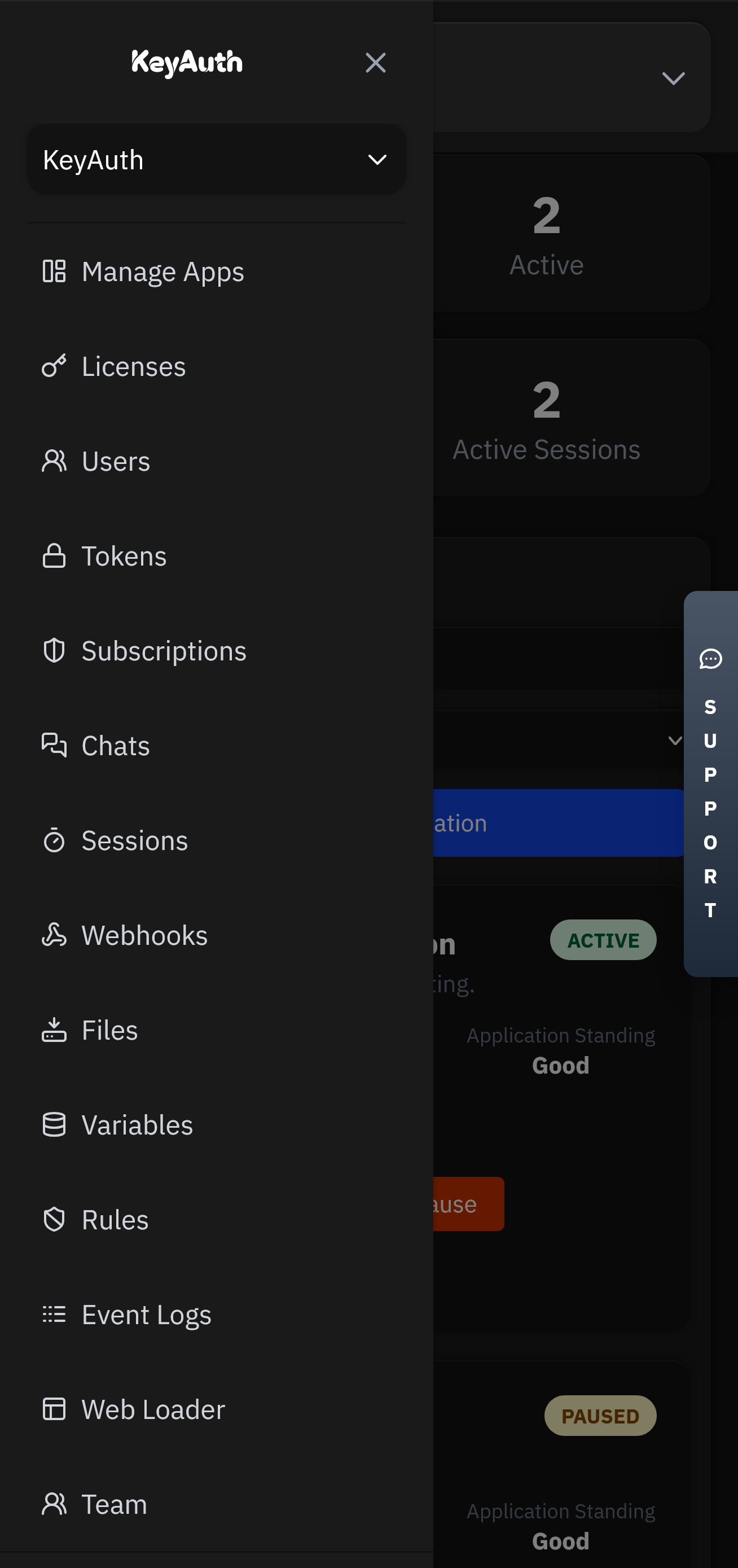
A comprehensive suite of integrated tools for authentication, monetization, and user engagement.
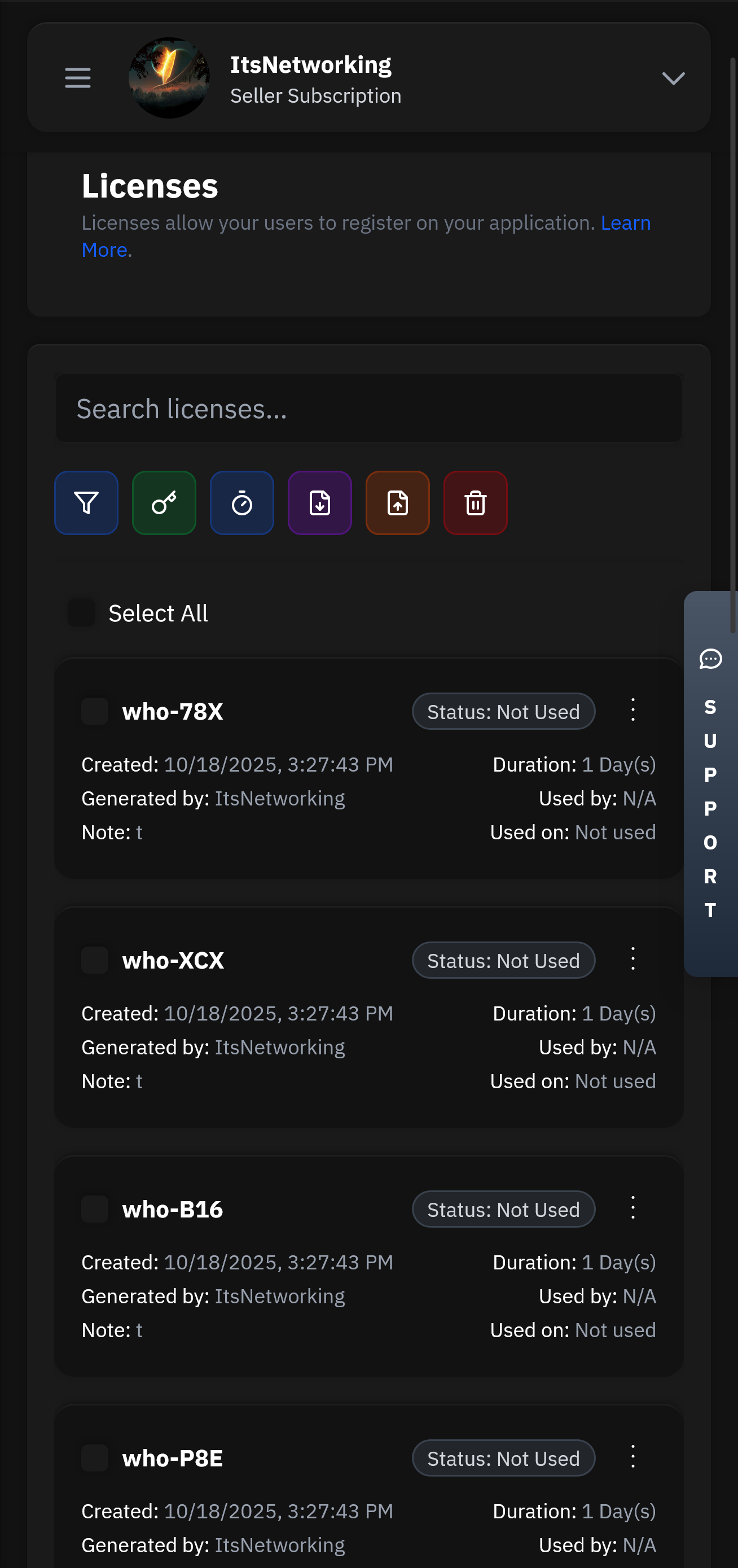
Create and manage user licenses with flexible expiration, trial, and subscription options.
Our lightning-fast infrastructure ensures your authentication requests are processed in under 50ms globally. With 99.99% uptime and redundant systems, your users will never experience delays.
Manage your applications remotely with our powerful Seller API. Update licenses, ban users, modify subscriptions, and monitor usage from anywhere in the world with full administrative control.
Built on a serverless architecture that automatically scales to handle millions of requests. Our global edge network ensures low latency and high availability across 300+ locations worldwide.
There's no question as to why we are the best choice for your business and one of the most used Authentication services.
Head over to our register page to create your account.
Applications will be the heart of your service. This is where all your users, licenses, chats and more will be stored.
Head over to our GitHub to find our examples and client API files. Simply follow the steps and have authentication up in less than 5 minutes.
Control your application from anywhere using our mobile app. Manage licenses, chat with users, and view analytics directly from your phone or tablet.

Flexible options for teams of all sizes.
Decoding Ethereum’s Pulse: A Deep Dive into the MVRV Z-Score In the volatile world of crypto, finding a "buy low, sell high" signal that actually works can feel like chasing a ghost. However, on-chain analysts often point to one metric as the ultimate "thermometer" for market health: the MVRV Z-Score . As of April 2026, Ethereum has been showing some fascinating movements in its on-chain data. Let's break down what this indicator is telling us about ETH's current valuation. What is the MVRV Z-Score? The MVRV Z-Score is a statistical tool used to identify when an asset is extremely overvalued or undervalued relative to its "fair value". It consists of three components: Market Value (MV): The total current market cap (Price × Supply). Realized Value (RV): The "on-chain" cost basis. It sums the value of all ETH based on the price when each coin last moved. Z-Score (Standard Deviation): A statistical measure that helps filter out the extreme "noise" or volatility in market value. The formula is essentially: (Market Cap – Realized Cap) / Standard Deviation of Market Cap . Reading the Signals: Red vs. Green Zones Historically, this score has been a remarkably accurate indicator for market turning points. Analysts debate whether Ether has capitulated or has further to fall
The Ethereum MVRV Z-Score: Pinpointing Market Tops and Bottoms In the volatile world of cryptocurrency, distinguishing between irrational exuberance and maximal financial opportunity is the holy grail of investing. While lagging indicators like simple moving averages are useful, on-chain metrics offer a deeper look into the economic health of a network. Among the most reliable of these metrics is the MVRV Z-score . Originally developed for Bitcoin by Murad Mahmudov and David Puell, the MVRV Z-score has proven to be an eerily accurate tool for analyzing Ethereum’s market cycles, helping investors identify when the asset is massively overvalued or deeply undervalued. What is the MVRV Z-Score? To understand the Z-score, one must first understand the MVRV ratio (Market Value to Realized Value).
Market Value (MV): The current price of Ethereum multiplied by the total circulating supply. This is what the market thinks Ethereum is worth right now. Realized Value (RV): The sum of all Ethereum valued at the price they were last moved on-chain. This acts as a proxy for the "cost basis" of the entire market. It represents what investors actually paid for their coins.
The MVRV ratio is simply Market Value divided by Realized Value. When this ratio is high, it means the market price is significantly higher than the average cost basis—implying investors are sitting on large profits and may be inclined to sell. However, raw MVRV ratios can be difficult to read because crypto markets are explosive. This is where the Z-score comes in. The Mathematical Edge The Z-score is a statistical measurement that describes a value's relationship to the mean of a group of values. It is measured in terms of standard deviations from the mean. The formula for the Ethereum MVRV Z-score is: $$ \text{Z-Score} = \frac{\text{Market Value} - \text{Realized Value}}{\text{Standard Deviation of Market Value}} $$ By normalizing the data using standard deviations, the Z-score filters out the noise and visualizes the extremity of the price movement. It essentially asks: “How abnormal is the current price compared to the historical average?” Why It Matters for Ethereum Ethereum, much like Bitcoin, moves in four-year cycles largely dictated by macroeconomic trends and network upgrades (such as The Merge or EIP-1559). During bull runs, market value decouples rapidly from realized value as speculation drives prices up. During bear markets, market value crashes back down toward realized value as speculators capitulate. The MVRV Z-score visualizes these phases with distinct bands: 1. The Red Zone (Market Tops) Historically, when the Ethereum MVRV Z-score rises above 7.0 , it signals that the market is in a state of euphoria. At this level, the average holder is sitting on massive unrealized profits. Ethereum Mvrv Z-score
Implication: The probability of a sell-off to realize gains is extremely high. Historical Context: The Z-score breached this level during the peaks of 2018 and 2021, marking the exact moments to take profit before significant crashes.
2. The Green Zone (Market Bottoms) When the Z-score drops below 1.0 (or specifically approaches 0.0 ), it indicates that Ethereum is trading at or below its "fair value." In this zone, the Market Value is very close to the Realized Value, meaning the average holder is underwater or breaking even.
Implication: Capitulation has usually occurred, and selling pressure is exhausted. This is historically the accumulation zone. Historical Context: The Z-score bottomed out during the crypto winters of 2018 and 2022, signaling the safest entry points for long-term investors. Decoding Ethereum’s Pulse: A Deep Dive into the
3. The Neutral Zone Between 1.0 and 7.0, the market is generally in a trend phase. If the score is rising from the green zone, it indicates a budding bull market. If it is falling from the red zone, it signals a bearish correction. The "Mean Reversion" Thesis The core philosophy behind using this indicator is mean reversion . In financial markets, prices tend to return to their historical average over time. The MVRV Z-score suggests that the gap between what the market thinks ETH is worth (Price) and what the network has absorbed in capital (Realized Price) cannot widen forever. When the Z-score hits a peak, gravity takes over, and the price is pulled back toward the realized price. Conversely, when the Z-score hits a bottom, the undervaluation attracts capital, pushing the price upward. Limitations and Nuance While the MVRV Z-score is a powerful tool, it is not a crystal ball. Investors should be aware of its limitations within the Ethereum ecosystem:
DeFi and Smart Contracts: Unlike Bitcoin, a significant portion of Ethereum’s supply is locked in DeFi protocols (staking, liquidity pools, lending). The movement of these coins on-chain can sometimes skew realized value data, as coins may be moved for functional reasons rather than trading intent. Tokenomics Shifts: The transition to Proof-of-Stake (The Merge) and the introduction of the burn mechanism (EIP-1559) altered ETH's supply dynamics. While the MVRV Z-score tracks profit/loss dynamics effectively, the underlying fundamental value proposition of Ethereum has evolved since the metric was created. Lagging Nature: Realized Value is a lagging indicator because it relies on historical transaction data. While the Z-score predicts reversals well, it is often slow to signal the exact day of a bottom or top.
Conclusion The Ethereum MVRV Z-score remains one of the most robust on-chain indicators for macro-cycle analysis. It strips away emotional bias and provides a mathematical framework for understanding market profitability. For the savvy investor, it serves as a compass: telling you when to be fearful during the irrational peaks of the red zone, and when to be greedy during the despair of the green zone. By tracking the deviation between price and value, the Z-score helps answer the most difficult question in crypto: “Are we too early, or are we too late?” Let's break down what this indicator is telling
Once upon a time in the digital kingdom of Ethereum, there lived a wise oracle known as the MVRV Z-Score . This oracle didn't look at the stars; instead, it watched the gap between two powerful forces: Market Value (the price everyone sees) and Realized Value (the price where everyone actually bought in). The Legend of the Three Zones The story of the MVRV Z-Score is told through three distinct chapters, each signaling a different fate for the kingdom's citizens: The Red Peak of Hubris : When the score climbed high into the (above 7), it was a sign of extreme euphoria. The oracle warned that the price had far outpaced the actual cost basis of the holders. Historically, this meant a market top was near, and a great fall was coming. The Valley of Capitulation : Conversely, when the score dipped below zero and into the green zone , the kingdom was in despair. Most citizens were "underwater," holding coins worth less than what they paid. In early 2026, for instance, the score fell to -0.42, signaling a mass selling zone and deep undervaluation. The Fair Ground : Most of the time, the score wandered in between, a period of quiet building where the network's fundamentals and price stayed in a healthy, steady dance. A Recent Chapter: The Winter of 2026 In February 2026, a chill swept through the market as Ethereum's price tumbled toward $2,000. While many panicked, the MVRV Z-Score flashed a familiar signal. It dropped into the "undervalued" threshold —a level exactly at or below 0. Market analysts like Joao Wedson looked at their charts and saw the blue line of the Z-score hitting the "capitulation zone". They knew from the scrolls of history—like the bear markets of 2018 and 2022—that while the pain was real, these "oversold" signals often preceded the start of a new, legendary climb. And so, the story continues: traders watch the oracle, waiting for it to crawl out of the green valley, signaling that the kingdom of Ethereum is ready to rise once more. comparison chart of Ethereum's current price against its historical MVRV Z-Score levels? AI responses may include mistakes. For financial advice, consult a professional. Learn more ETH MVRV Z-Score -0.42: Capitulation Signal | MEXC News
Technical Analysis: Ethereum MVRV Z-Score Executive Summary The Market Value to Realized Value (MVRV) Z-Score serves as a critical on-chain metric for identifying extreme market conditions—specifically when Ethereum (ETH) is significantly overvalued or undervalued. As of April 2026 , recent readings of suggest ETH has entered a "capitulation phase". Historically, negative scores have provided high-conviction windows for long-term accumulation. 1. Conceptual Framework The MVRV Z-Score deviates from traditional financial z-scores by comparing two distinct valuation layers of the Ethereum network: Market Value (MV): The current spot price multiplied by the total circulating supply. This reflects current speculative demand. Realized Value (RV): The sum of the value of all coins at the time they last moved on-chain. This represents the aggregate "cost basis" of all network participants. The Z-Score Formula: This normalization allows for a standard comparison across different market cycles despite increasing market size. 2. Historical Interpretation Thresholds Analysts primarily use three zones to gauge market sentiment: Z-Score Data Suggests Potential Rebound Zone - Binance


Got questions? We've got answers. If you can't find what you're looking for, feel free to reach out to our support team.