✨ Welcome to our new update!
Xmk-010 Manual ⇒
Secure, scalable, and game-changing authentication for your applications. Get started in minutes with our powerful APIs and SDKs.
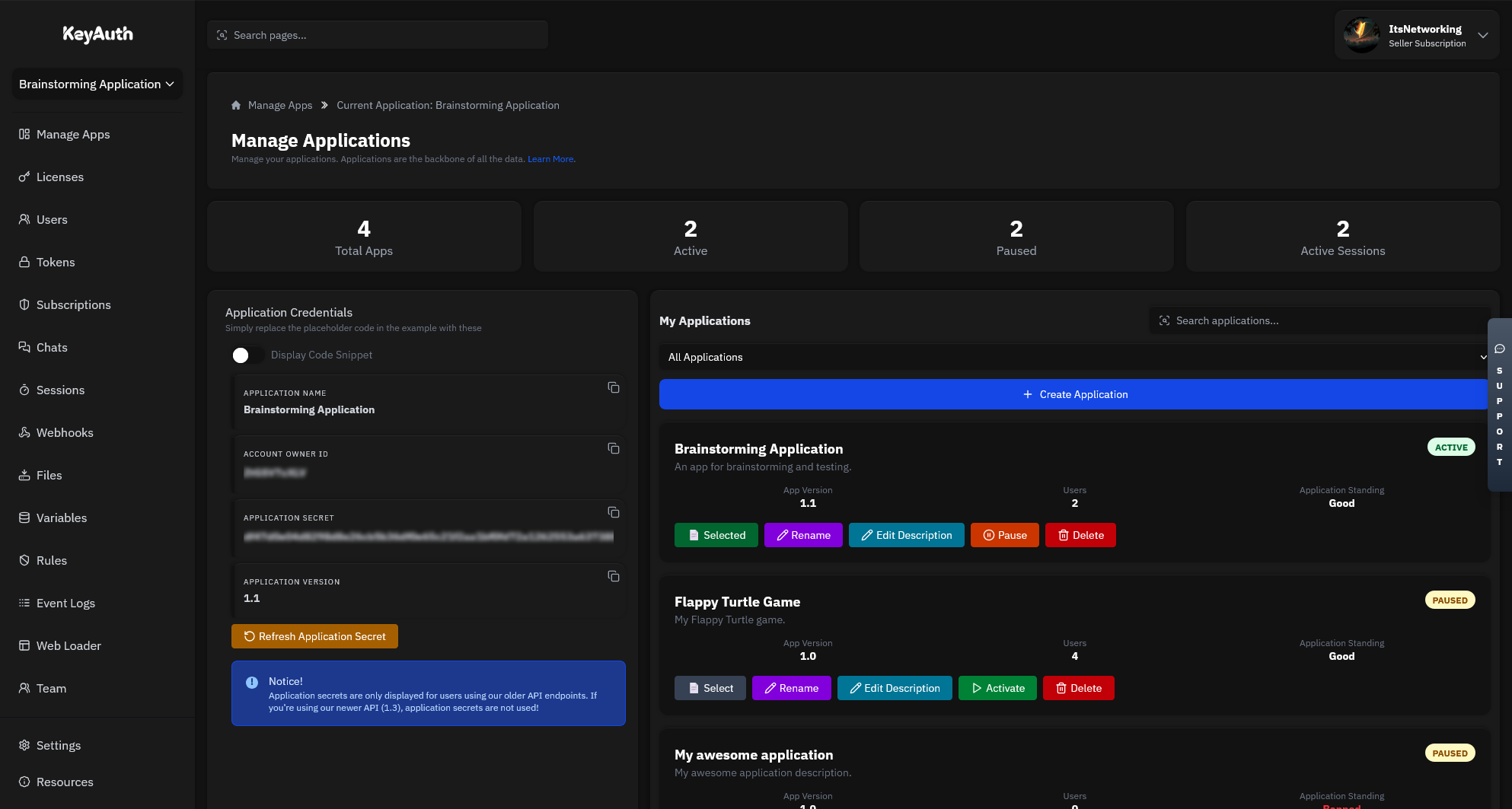
Secure, scalable, and game-changing authentication for your applications. Get started in minutes with our powerful APIs and SDKs.
Integrate into any programming language

A comprehensive suite of integrated tools for authentication, monetization, and user engagement.
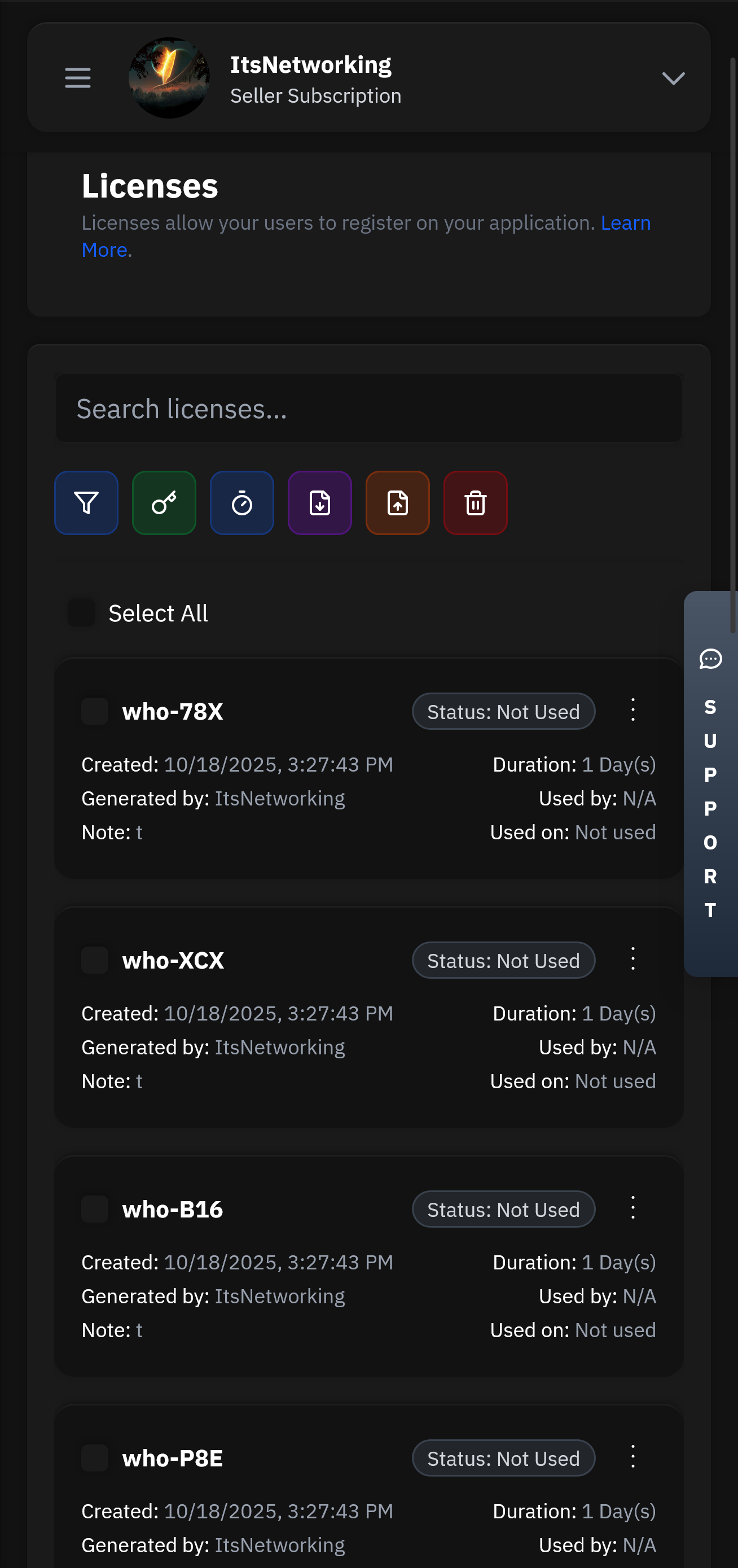
Create and manage user licenses with flexible expiration, trial, and subscription options.
Our lightning-fast infrastructure ensures your authentication requests are processed in under 50ms globally. With 99.99% uptime and redundant systems, your users will never experience delays.
Manage your applications remotely with our powerful Seller API. Update licenses, ban users, modify subscriptions, and monitor usage from anywhere in the world with full administrative control.
Built on a serverless architecture that automatically scales to handle millions of requests. Our global edge network ensures low latency and high availability across 300+ locations worldwide.
There's no question as to why we are the best choice for your business and one of the most used Authentication services.
Head over to our register page to create your account.
Applications will be the heart of your service. This is where all your users, licenses, chats and more will be stored.
Head over to our GitHub to find our examples and client API files. Simply follow the steps and have authentication up in less than 5 minutes.
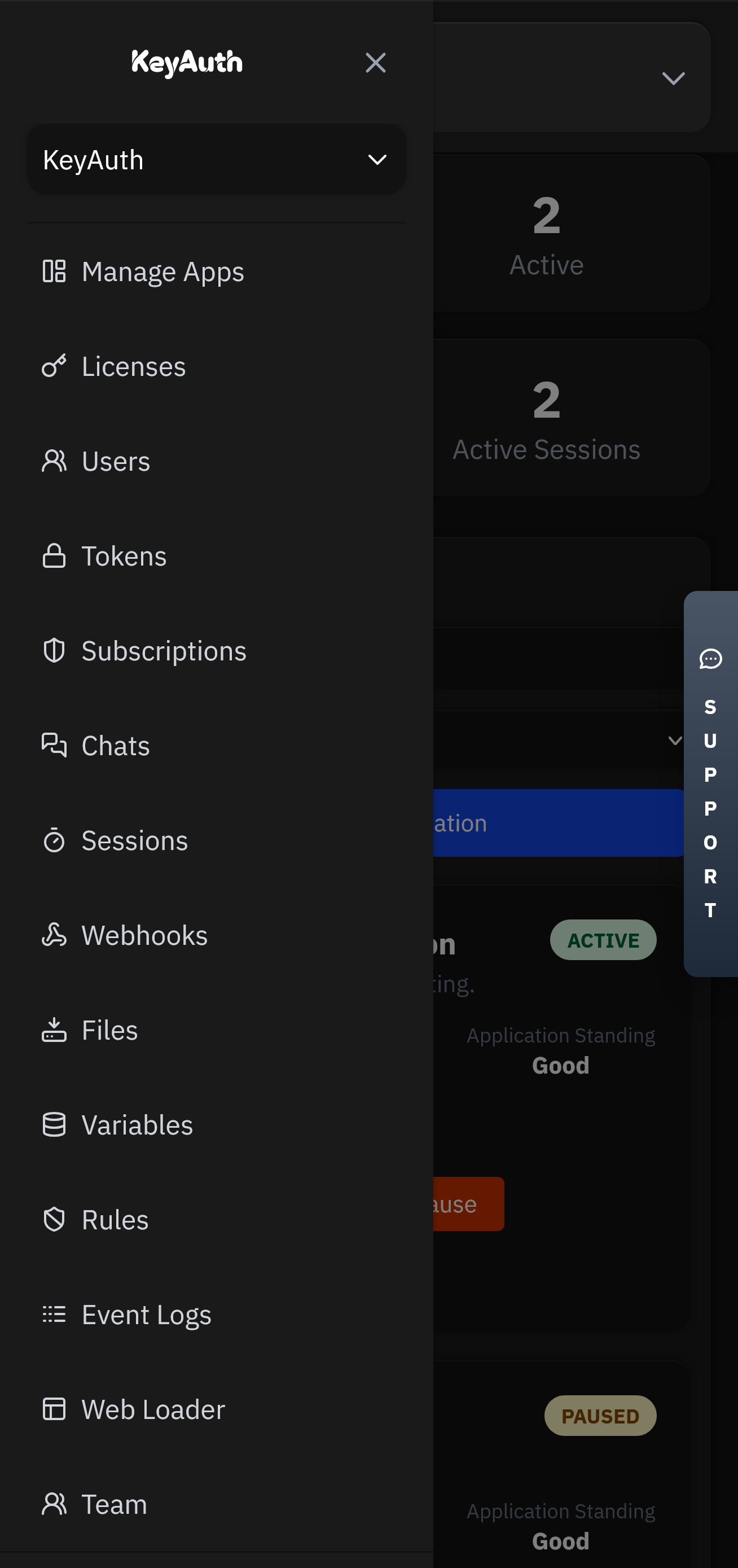
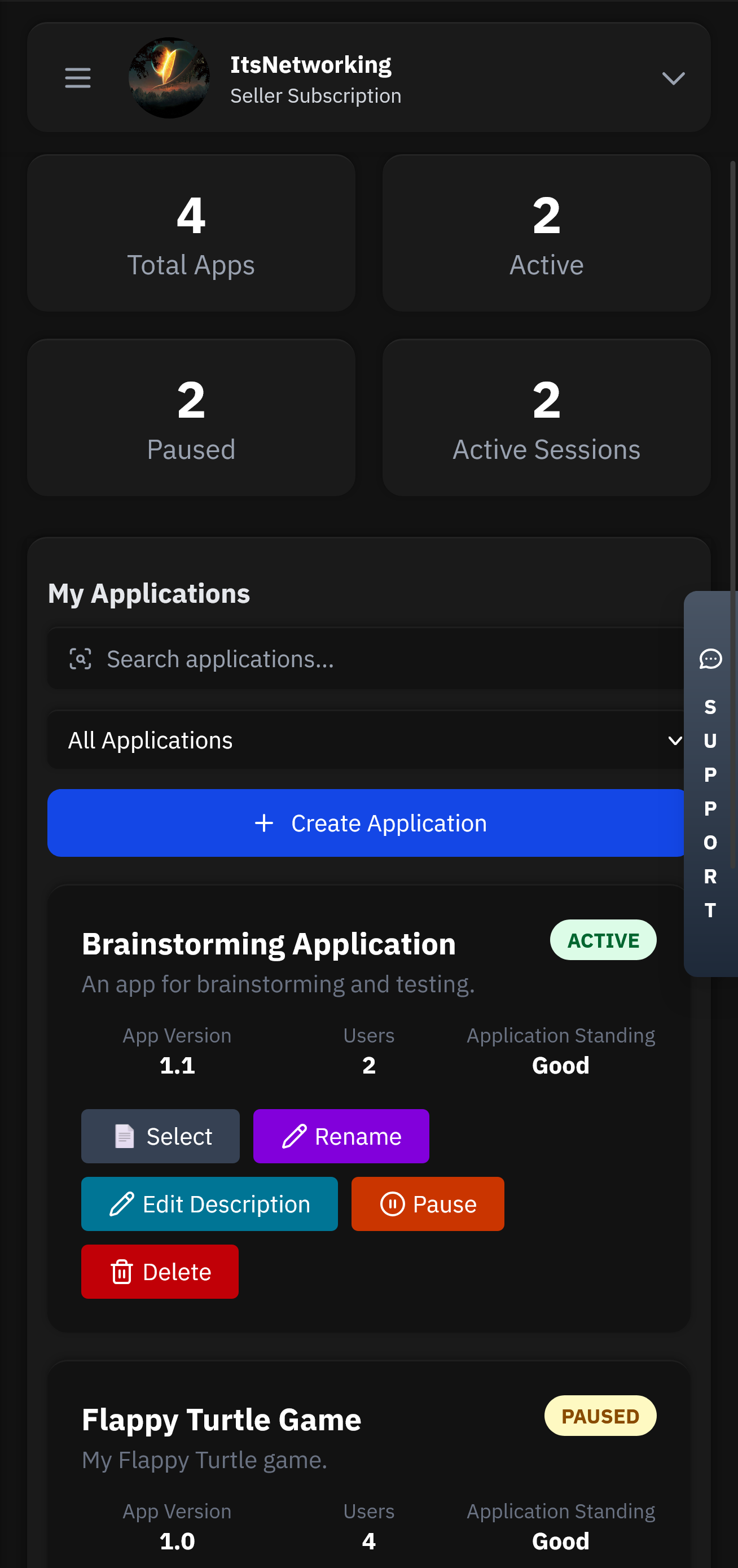
Control your application from anywhere using our mobile app. Manage licenses, chat with users, and view analytics directly from your phone or tablet.
Flexible options for teams of all sizes.
: Controls the opening and stopping of connected equipment (like compressors) based on user-defined upper and lower temperature limits. Real-Time Monitoring
Word leaked out in odd ways. A barista’s tablet started printing out the exact change for a forgotten tip. A municipal bench, when sat upon, played a recorded voice that recited a stranger’s childhood recipe. People began to whisper about a how-to that fixed more than machines. They did not speak of a manual by name. Names felt dangerous now. People who had never known the manual’s pages would report small, unlikely precisions: a bus that arrived exactly when needed, a lost photograph that found its owner.
| Parameter | Value | |-----------|-------| | Power Supply | 12V DC ±10%, 5W max | | Analog Inputs | 4 differential, 16-bit resolution | | Input Types | 0-10V, 4-20mA, TC (K,J,T), PT100 | | Accuracy | ±0.1% of full scale | | Sampling Rate | 10 Hz (all channels simultaneously) | | Outputs | 2x Relay (Form C), 2x Open-collector NPN | | Communication | RS-485 (Modbus RTU), USB 2.0 | | Display | 2.4" TFT, 320x240, 65k colors | | Operating Temp | 0 to 50°C | | Protection | IP20 (front), IP10 (rear) | | Dimensions | 96 x 96 x 72 mm (W x H x D) | | Weight | 350 g |
The primary function of the XMK-010 manual is the establishment of a fail-safe operational environment. Like most high-performance hardware, the XMK-010 operates under specific parameters regarding voltage, temperature, and load capacity. The manual begins with essential safety protocols—standard industry requirements that are nevertheless vital. It delineates the "Do Not Exceed" thresholds which, if ignored, could result in catastrophic hardware failure or personal injury. For the novice operator, the section on initial setup is particularly valuable. It provides a step-by-step initialization sequence, ensuring that the device is calibrated correctly before it is integrated into a larger workflow. By strictly adhering to these initial guidelines, the operator mitigates the risks associated with cold-start errors and misconfiguration.
Beyond the rudiments of safety and setup, the manual serves as a roadmap to the device’s advanced functionality. The XMK-010 is engineered with a multi-layered interface that can be daunting without proper guidance. The manual breaks down the logic of the control panel, translating cryptic alphanumeric error codes into actionable solutions. For instance, the "P-Mode" operational matrix—a feature unique to the XMK series—is explained in granular detail, allowing users to customize output variables to suit specific tasks. Without the manual’s elucidation of the menu hierarchy, a user might only utilize a fraction of the machine’s potential, effectively turning a precision instrument into a generic tool. The technical schematics included in the appendix further empower maintenance teams to identify components without requiring external consultation, thereby reducing downtime.


Got questions? We've got answers. If you can't find what you're looking for, feel free to reach out to our support team.