Record and replay groups of keyboard and mouse actions With the built-in action wizard editor.
|
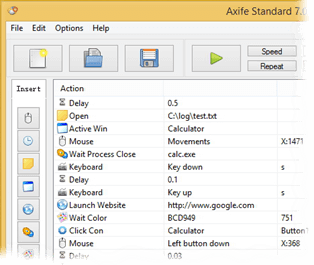 |
Record and replay groups of keyboard and mouse actions With the built-in action wizard editor.
|
|
Instead of manual polling, sensors can be configured to "push" data to a specific URL. For firmware 5+, this is managed through Xovis Logics , which separates data delivery into "Connections" (destination server) and "Agents" (data format/type).
| Feature | Xovis API Docs | Brickstream (now Sensormatic) | Traf-Sys | |---------|----------------|-------------------------------|-----------| | REST API | ✅ Detailed | ✅ Good | ❌ Limited | | Real-time streaming | ✅ (Socket/MQTT) | ❌ No | ✅ (WebSocket) | | Sandbox environment | ❌ No | ✅ Yes | ❌ No | | Rate limits documented | ❌ No | ✅ Yes | ❌ No | xovis api documentation
He closed the documentation, but as he reached for the light switch, a single notification popped up on his phone: Webhook Event: Door_Open (Confidence: 99%) He looked at the door. It was still locked. How would you like to expand this narrative —perhaps by exploring the security implications of the sensor or the technical specifics of the JSON payloads? Instead of manual polling, sensors can be configured
GET /counts/interval?start=2023-01-01&end=2023-12-31&interval=PT1H&limit=1000&offset=0 It was still locked
The is more than a technical manual; it is the bridge between high-fidelity sensor data and your digital ecosystem. By mastering the authentication flows, understanding the difference between occupancy and queue endpoints, and respecting rate limits and timezone nuances, you can build systems that automatically adjust HVAC based on crowding, trigger staffing alerts for long queues, or generate ROI reports for retail footfall.